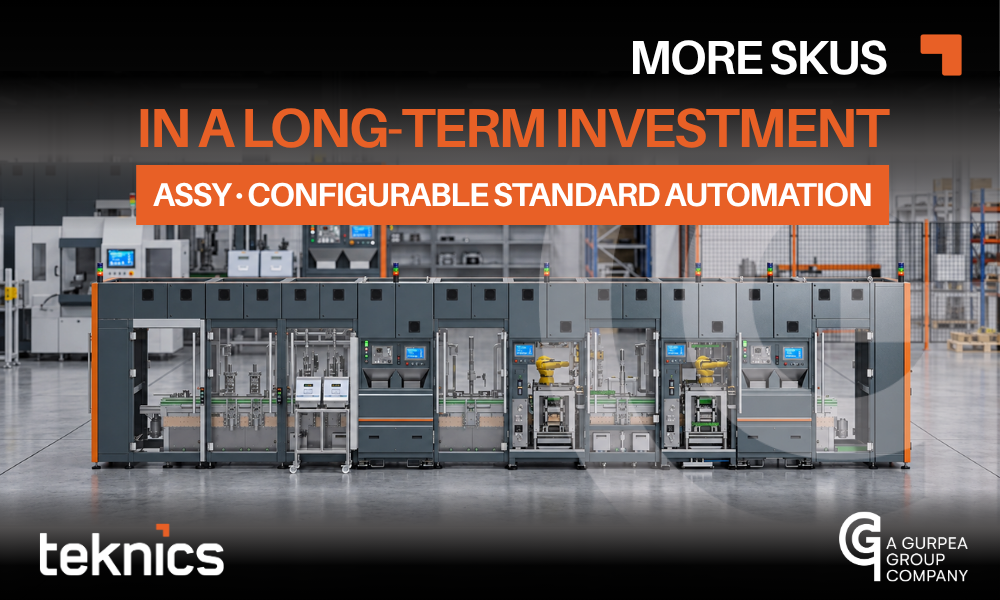
In recent decades, the food industry has experienced a significant technological revolution with the introduction of process automation. This transformation has improved the efficiency, quality and safety of food, while reducing operational costs and allowing greater innovation in food manufacturing.
Process automation in the food sector involves the use of technology to perform specific tasks autonomously, eliminating or reducing the need for human intervention. This can include automation of production, packaging, labeling, quality inspection and inventory control, among other processes.
At Gurpea we want you to know this process first-hand, so in this post we are going to tell you how automation is transforming the food industry and how Gurpea is leading this change.

How to optimize the food manufacturing process
Food manufacturing is a complex process that involves multiple stages, from the selection and preparation of ingredients to packaging and distribution. Each of these stages presents unique challenges in terms of efficiency and quality. Process automation allows optimizing each of these stages, eliminating repetitive and error-prone tasks, and guaranteeing uniform and high-quality production.
The implementation of technologies and automated control systems not only accelerates the production process, but also reduces operational costs and minimizes raw material waste. In addition, automation allows greater flexibility in production, which allows quick adaptation to changes in market demand and launching new products more efficiently.

What processes can be automated in food manufacturing?
The automation of high-cadence processes, in search of efficiency and precision, is a very specific demand of the food industry.
In this context, Gurpea’s experience in this type of solutions is presented as a clear added value, and positions it in the market as a reliable reference for those companies in the food sector that seek to reduce costs and maintain high quality standards in their manufacturing processes.
Automated palletizing
We can automate the palletizing of virtually any type of product to achieve greater efficiency, reliability and a safer and more consistent work environment.
With robotic palletizing, it is possible to automate multiple processes in a single solution, taking advantage of the capacity of several robots in most palletizing configurations. This allows numerous operations to be carried out at high speed with exceptional precision in a limited space.
Mixed packaging and palletizing
Offers greater freedom and flexibility in production with mixed packaging, which allows you to easily switch between products and packaging sequences.
Although mixed packaging is often done manually, automating this function can free employees for other tasks, with benefits such as cost reduction, less time spent on the task and better working conditions.
Automation of manual processes
We can also improve the speed and quality of product processing, as well as working conditions, by using industrial robots to perform a variety of tasks. Industrial robots can reduce unit costs and offer a complete solution that typically pays for itself in 12-24 months when operating 24 hours a day.
Automated boxing
Automation also allows us to eliminate manual boxing with equipment that performs quality controls on products before packing them into cardboard boxes. The vision equipment acts as the robot’s eyes, detecting errors and deficiencies to ensure a more efficient and consistent process without compromising quality.
Box filling and emptying
The food industry relies heavily on plastic boxes for various applications, which requires efficient equipment for loading and unloading goods. Our experience allows us to offer the best solutions for your specific needs, ensuring smooth and efficient operation at all times.
Quality and hygiene improvement
Quality and hygiene are critical aspects in the food industry, where food safety is an absolute priority. Process automation allows maintaining the highest standards of quality and hygiene by eliminating manual handling of food and reducing the risk of cross-contamination. In addition, automated control systems can constantly monitor production conditions and alert about any deviation that may affect the quality of the final product.
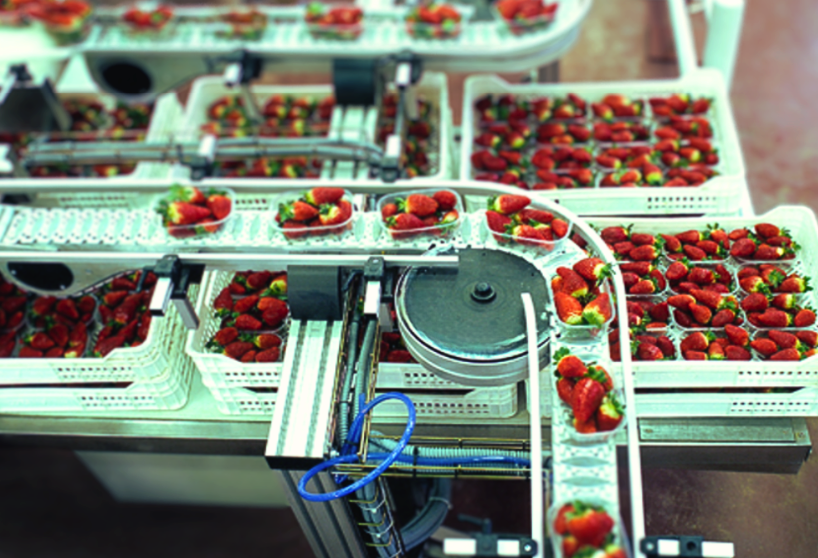
Custom solutions for sector needs
In a market as dynamic as the food industry, companies face constant challenges to remain competitive and meet consumer demands. At Gurpea, we understand the needs of the sector and strive to offer innovative solutions that help our clients optimize their production processes and improve their profitability.
Each food company has its own production processes, workflows and operational requirements that must be taken into account when implementing automation solutions. Custom projects allow designing and developing systems that adapt perfectly to these particularities, thus maximizing efficiency and productivity.
Our focus on research and development has allowed us to develop cutting-edge technologies in process automation, specifically designed for the needs of the food industry. From robotic handling systems to intelligent packaging solutions, we offer a wide range of products and services that help our clients achieve their efficiency, quality and hygiene goals.
In addition, at Gurpea we understand the importance of collaboration and teamwork. We work side by side with our clients to understand their unique needs and develop custom solutions that adapt to their processes and budgets. Our commitment to excellence and innovation has made us leaders in the field of process automation in the food industry.
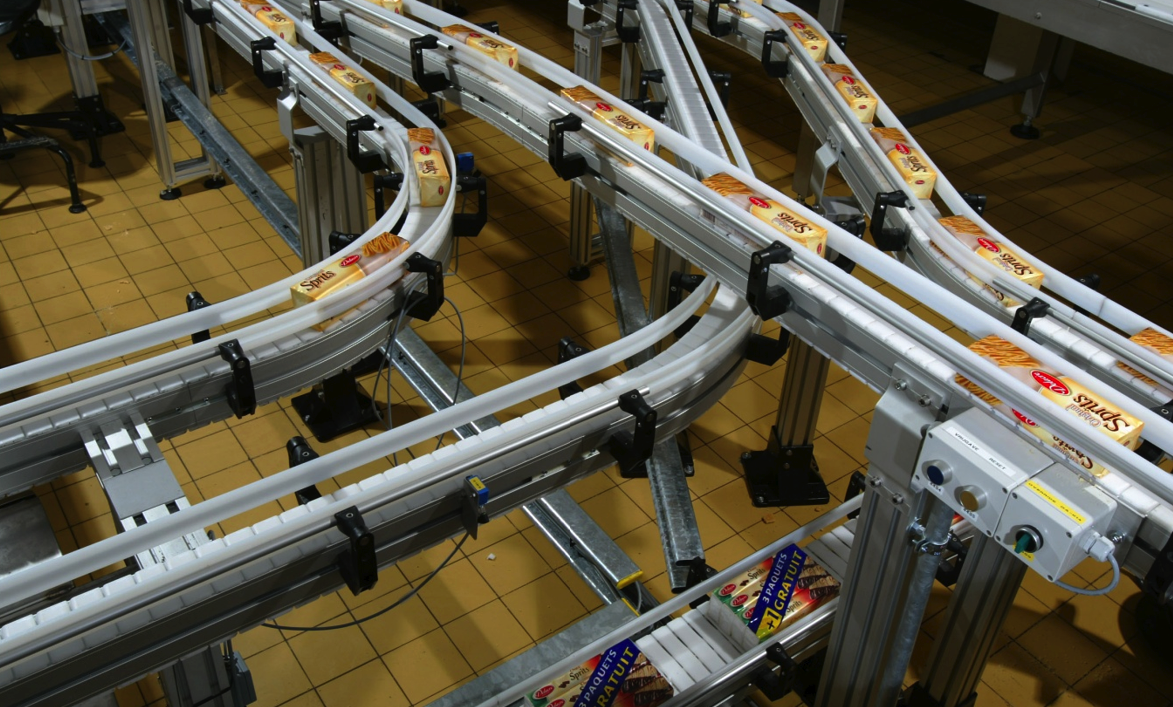
Benefits of automation in the food sector
Below we will review some of the main benefits of automation in the food sector:
Efficiency improvement
Automation allows repetitive tasks to be performed faster and more accurately than humans, leading to greater efficiency in production and other processes.
Quality optimization
By standardizing processes, automation guarantees greater optimization in the quality of food products, reducing variability and minimizing human errors.
Reduction of operational costs
Although the initial investment in automated technology can be high, in the long term, it can result in significant savings by reducing labor costs and improving resource utilization.
Improved food safety
Automation can improve food safety by reducing the risk of cross-contamination and ensuring compliance with safety and quality regulations.
Flexibility and adaptability
Automated systems can be easily adjusted to adapt to changes in market demand or production requirements, allowing greater flexibility in food manufacturing.
Key technologies in food process automation
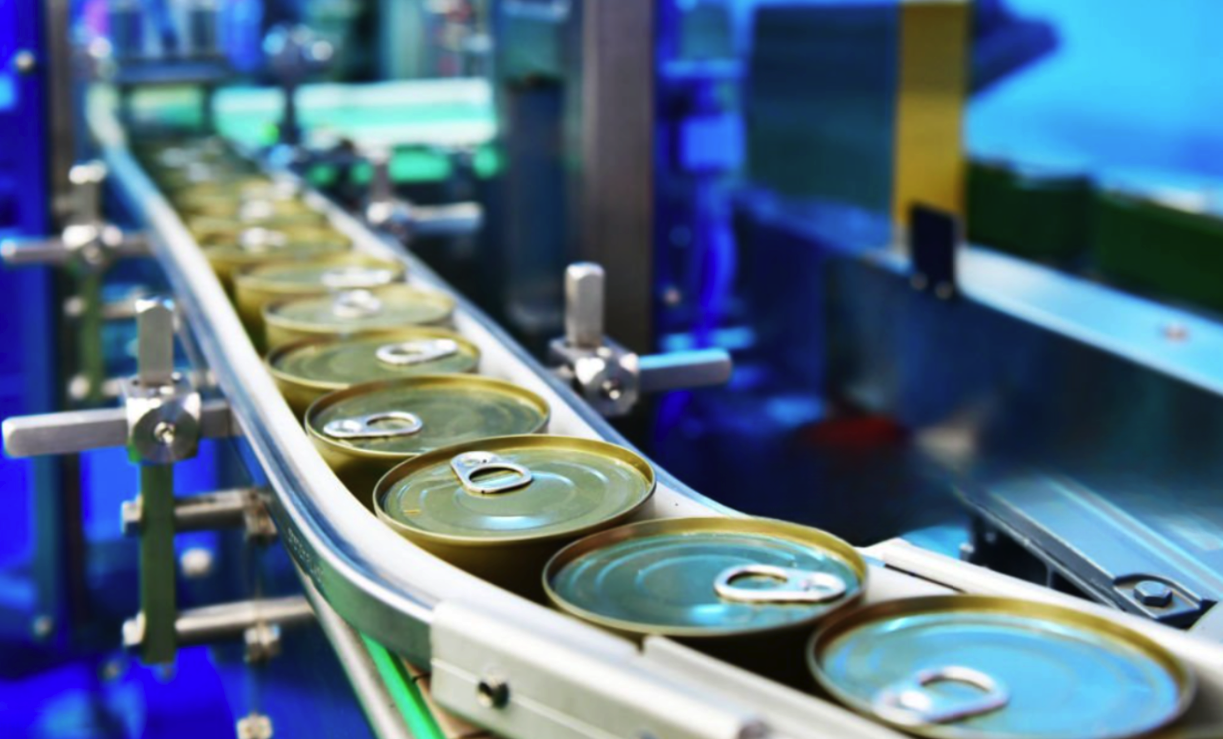
Food process automation has become a fundamental pillar for improving efficiency, quality and profitability in the food industry. To achieve these objectives, various key technologies are used that optimize each stage of the production process, such as those shown below:
Robotics
Robots are used in various stages of production, from handling raw materials to final packaging, allowing greater precision and speed in operations.
Artificial vision systems
These systems are used for quality inspection, defect detection and product classification, ensuring that only high-quality products reach the market.
Supply chain automation
Automation extends beyond production to include inventory management, logistics and distribution, optimizing the supply chain and improving overall efficiency.
Artificial Intelligence and data analysis
AI and data analysis are used to optimize production processes, predict market demand, and improve real-time decision making.


We can affirm that process automation is revolutionizing the food industry, offering a series of benefits ranging from greater efficiency and quality to greater profitability.
At Gurpea, we are committed to continuing to lead this change, offering innovative solutions that help our clients achieve their business objectives and meet the demands of a constantly evolving market.
Contact us today to discover how we can help you transform your business! A Gurpea expert will carry out a personalized assessment of your project.